
March 18, 2026

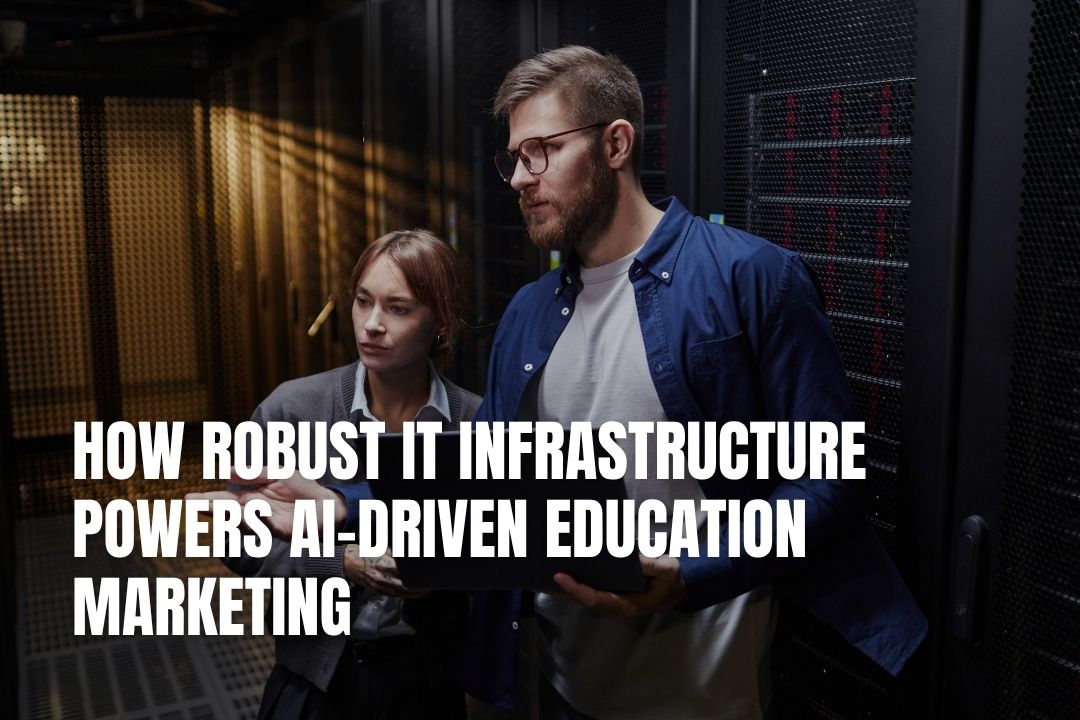
Recruitment of students is not what it was five years ago. Competition is more intense, families have more choices, and even the typical placement of better copy, larger ad spend, etc., no longer moves the needle as it did in previous days.
The difference between the schools that are still hitting their numbers and those that are not is hardly ever the marketing strategy at the surface.
Peel a little deeper, and you will soon discover that schools that are performing well made deliberate investments in technical infrastructure early, before the pressure came, and those investments shaped what their teams could do from that point on.

Education technology conversations have a habit of front-loading the exciting parts. Everyone wants to discuss the personalized email sequences, the chatbot fielding inquiry calls at midnight, and the model that predicts yield rates before the application window closes. Those things are real, and they do work. The part that rarely comes up is what has to be functioning properly before any of that is possible.
A useful comparison is a well-run restaurant kitchen. Diners talk about the food. Nobody at the table is thinking about the gas pressure, the walk-in refrigerator temperature, or the quality of the cookware. But the meal depends on all of it. AI marketing tools are what ends up on the plate. The IT infrastructure is everything happening out of sight that makes the plate possible.
For schools and universities, getting that foundation right means networking hardware capable of handling large data volumes, cloud systems that withstand peak traffic, and security protocols that protect student data-details that ensure AI tools function reliably and effectively.
When the infrastructure side is handled, AI tools can focus on what they are actually built for. Take a mid-sized university feeding its CRM history into a machine learning model. The model is not doing anything mysterious.
It looks at which engagement patterns have historically predicted completed applications, then identifies current prospects that match those patterns. Pages visited, time spent on tuition and aid sections, and response rates to previous outreach. The team gets a cleaner picture of where to direct attention. They send more relevant content to the right people. The numbers move.
That whole sequence, from pulling the data to running the model to pushing out the campaign and tracking what happens next, runs on hardware. High-performance computers for schools are no longer something only the physics department needs to justify in a budget meeting.
They sit at the center of whether a marketing operation can work at the speed modern recruitment demands. When the processing is slow, the insights arrive late. When insights arrive late, competitors who built their systems better have already made contact.
The appeal of personalized outreach in education marketing is straightforward enough. A family comparing three universities will respond better to a message that reflects what they have actually been researching than to a letter addressed to no one in particular. The question is how institutions deliver that at any meaningful scale without it becoming a manual process that falls apart under its own weight.
AI handles the scaling. It tracks how a prospective student navigates a website and adjusts what they see based on where their attention has been. It tracks where someone is in their decision process and queues up communication that fits that stage rather than sending the same sequence to everyone. It can surface scheduling options for campus visits based on a family's location and when similar families have historically responded.
None of that works if the underlying systems cannot process requests in real time. The personalized page a student loads is not stored somewhere waiting to be retrieved. It is assembled at the moment, based on live data read. When the hardware cannot keep pace with that demand, the experience degrades, the timing slips, and the relevance that made personalization worth pursuing disappears.
Very few institutions have the luxury of designing their technology environment from scratch. Most are working with legacy student information systems, CRMs that were implemented years ago, financial aid platforms, and communication tools that were never designed to talk to each other. Getting AI tools to perform inside that environment means solving the connectivity problem deployment.
The quality of any AI output is directly tied to the quality of the data going in. A model working from a contact list that has not been refreshed in five weeks, or making inferences from enrollment data that does not reflect recent changes, is not going to produce reliable guidance. The team following that guidance will make avoidable mistakes and probably blame the software. The software is not the problem.
Building a clean integration layer, the pipelines and interfaces that pull data from separate systems and normalize it into something consistent and current, is not interesting work to describe. But the institutions that have done it carefully and maintained it over time consistently point to it when asked what actually moved their enrollment outcomes. It is the kind of investment that shows up in results long before anyone thinks to give it credit.
None of this is to suggest that technology alone solves education marketing challenges. Institutions that succeed with AI-driven campaigns are those investing in internal talent-training marketers to interpret data, upskilling IT staff on marketing workflows, and fostering leadership that understands the synergy between these functions.
The technology works best when it is in the hands of people who know what questions to ask of it. A powerful predictive model is only useful if the marketing team understands its outputs well enough to act on them thoughtfully. A well-integrated data environment only matters if someone is actually using that data to inform decisions.
Robust IT infrastructure creates the conditions for AI to do meaningful work. It does not replace the judgment, creativity, and institutional knowledge that make education marketing effective. It amplifies them, provided the investment has been made, the systems are well-maintained, and the people using them know what they are doing.
Think of IT infrastructure as the engine of your marketing car. Without a powerful, reliable engine (your servers, cloud systems, and network), the advanced AI features (the car's sleek design and smart navigation) simply cannot function effectively. It handles the data processing and real-time requests that AI needs to work.
AI analyses historical data to find patterns in what successful applicants did. It then identifies current prospects showing similar behaviours, like time spent on the tuition page. This allows your team to focus their efforts on the most engaged and promising individuals with personalised content.
Yes, but it requires a crucial step: integration. You need to build clean data pipelines that pull information from your legacy student information systems, CRMs, and other platforms. A service like Attention Always can help ensure the AI model receives consistent, current data to produce reliable insights.
No, technology is only part of the equation. Your team is essential. You must invest in training your staff to understand the data, ask the right questions of the AI, and use its insights to make smarter marketing decisions. The tool is only as good as the person using it.
If your hardware is slow, the insights from AI will arrive too late. Personalised web pages will load slowly, degrading the user experience, and your competitors who invested in better systems will have already reached out to the best prospects. Speed and reliability are critical.
